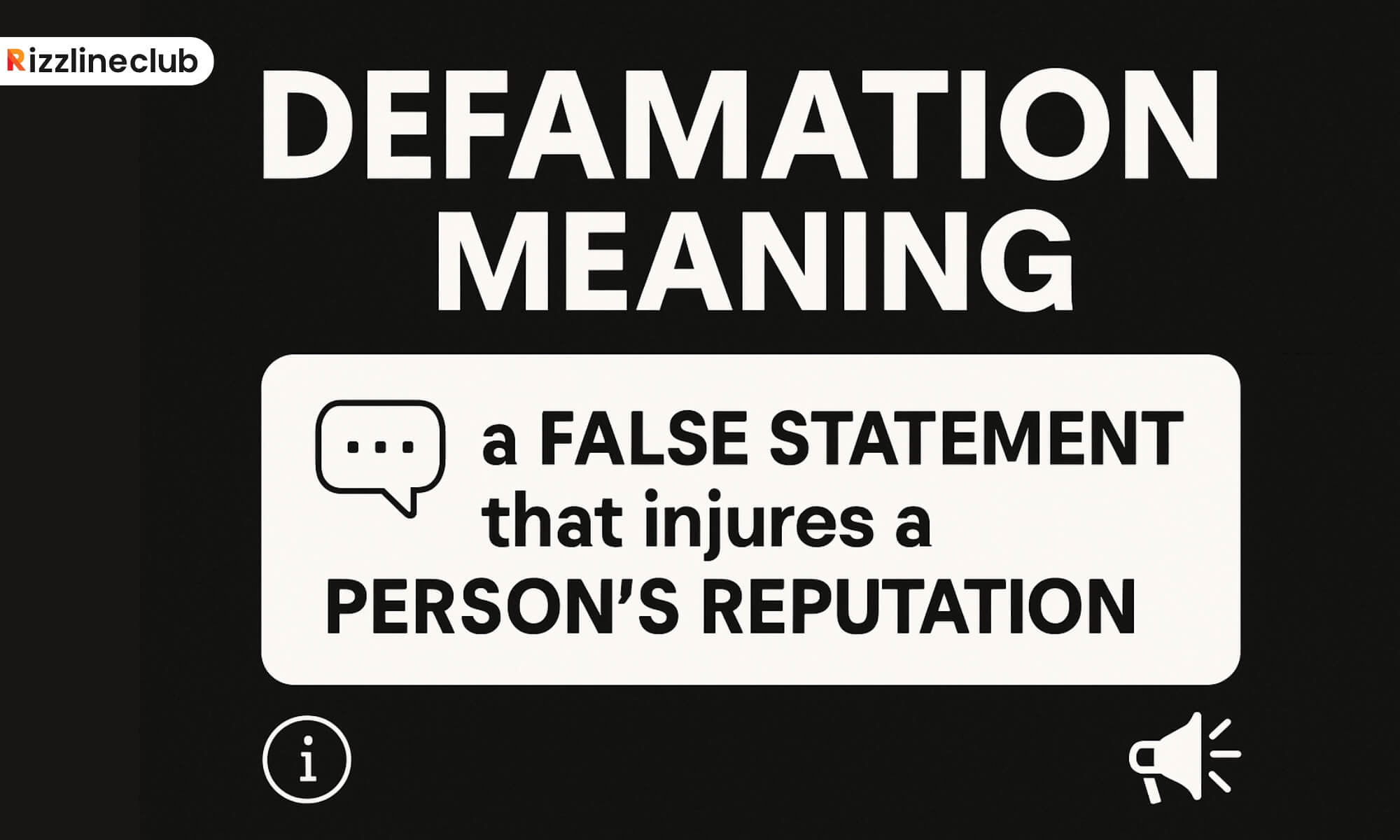
In simple terms, defamation is when someone says or posts something untrue that damages another person’s reputation.
It can be written (called libel) or spoken (called slander), but everyday social media users usually just say “defamation” for everything.
It’s not cute, not flirty, and definitely not casual slang — it’s a word used in arguments, especially when someone thinks they’re being lied about online.
Example sentence:
“Stop spreading rumors about me — that’s literally defamation.”
In short:
Defamation = False harmful statement = Damaging someone’s reputation.
📱 Where Is “Defamation” Commonly Used?
You’ll mostly see “defamation” in emotional or drama-filled online spaces where people debate, drag, or defend themselves.
Here are the most common places:
TikTok comments 😬 (especially during creator drama)
Instagram stories 🗣️ (call-out posts)
Twitter/X debates ⚡
YouTube reaction videos 🎥
Group chats when someone feels wrongfully accused 😅
Discord servers during arguments or rule disputes
Tone:
- ❌ Not flirty
- ❌ Not casual
- ✔️ Serious
- ✔️ Defensive or legal-ish
- ✔️ Often misused in heated conversations
- ❌ Not appropriate for formal or professional writing unless used correctly
💬 Examples of “Defamation” in Conversation
Here are realistic texting examples so you can see how people actually use it:
A: bro why did u tell ppl i cheated??
B: that’s not what i said 😭
A: delete that post abt me
B: why??
A: it’s literally defamation 🙄
A: you’re spreading lies… that’s defamation btw
B: girl i posted screenshots 💀
A: stop dragging me on your story
B: then stop lying
A: that’s defamation!!!
A: dude u can’t accuse me like that
B: i’m just saying facts
A: sounds like defamation to me
A: don’t joke like that 😩 ppl believe it
B: chill it’s obviously not real
A: still could be defamation
A: ur making stuff up abt me
B: relax it’s not that deep
A: it is when it’s defamation
🕓 When to Use and When Not to Use “Defamation”
✅ When to Use “Defamation”
When someone spreads false rumors about you
When you’re clarifying that a claim is untrue and harmful
When discussing online drama or misinformation
When referencing legal concepts in a casual way
When defending your reputation
❌ When Not to Use “Defamation”
- When the statement is TRUE
- When it’s just someone being rude or mean
- In professional emails unless it’s an actual legal situation
- When joking with friends (it sounds intense)
- When you don’t fully understand the legal meaning
Comparison Table
| Context | Example Phrase | Why It Works |
|---|---|---|
| Friend Chat | “Stop lying abt me, that’s defamation 😭” | Casual but expresses the seriousness |
| Work Chat | “I want to clarify that the claim is inaccurate.” | Professional without legal accusations |
| “Please correct the inaccurate information shared about me.” | Formal, neutral, clear | |
| Social Media | “This rumor isn’t true — please stop spreading it.” | Public, calm, and non-legal phrasing |
| Drama/Conflict | “Posting that without proof is defamation.” | Points out harm directly |
🔄 Similar Slang Words or Alternatives
| Term | Meaning | When to Use |
|---|---|---|
| Slander | False spoken statement harming someone’s reputation | When it’s verbal, not written |
| Libel | False written/post statement harming someone’s reputation | Online posts, comments, screenshots |
| Rumor | Unverified info spreading around | Casual accusations without legal tone |
| Dragging | Publicly criticizing someone harshly | Social media drama |
| Calling out | Publicly naming someone’s behavior | When pointing out problematic actions |
| Cap / No cap | Saying something is a lie / truth | Light, casual way to challenge accuracy |
❓ FAQs About “Defamation”
1. Is “defamation” slang?
Not really — it’s a legal term. But people use it casually online, especially during arguments.
2. Does defamation always mean someone can be sued?
No. To be legally defamation, the statement must be false, harmful, and stated as fact — not opinion.
3. Is it defamation if someone is telling the truth?
No. Truth is a defense against defamation.
4. What’s the difference between defamation, libel, and slander?
Defamation = the overall concept
Libel = written
Slander = spoken
5. Why do people misuse “defamation”?
Because it sounds legal and powerful, so people throw it around in arguments to sound serious.
6. Is calling someone out defamation?
Only if what you’re saying is untrue and harmful — otherwise, it’s just online criticism.

Marconi is the creative mind behind Rizz Line Club, your go-to hub for the smoothest rizz lines, clever captions, and charming one-liners. With a passion for wordplay and viral trends, Marconi brings fresh, witty, and relatable content that keeps your socials lit and your DMs winning. When he's not crafting the perfect rizz, he's probably decoding pop culture or vibing with meme-worthy humor.
- Marconihttps://rizzlineclub.com/author/info-irtazagmail-com/

- Marconihttps://rizzlineclub.com/author/info-irtazagmail-com/

- Marconihttps://rizzlineclub.com/author/info-irtazagmail-com/

- Marconihttps://rizzlineclub.com/author/info-irtazagmail-com/