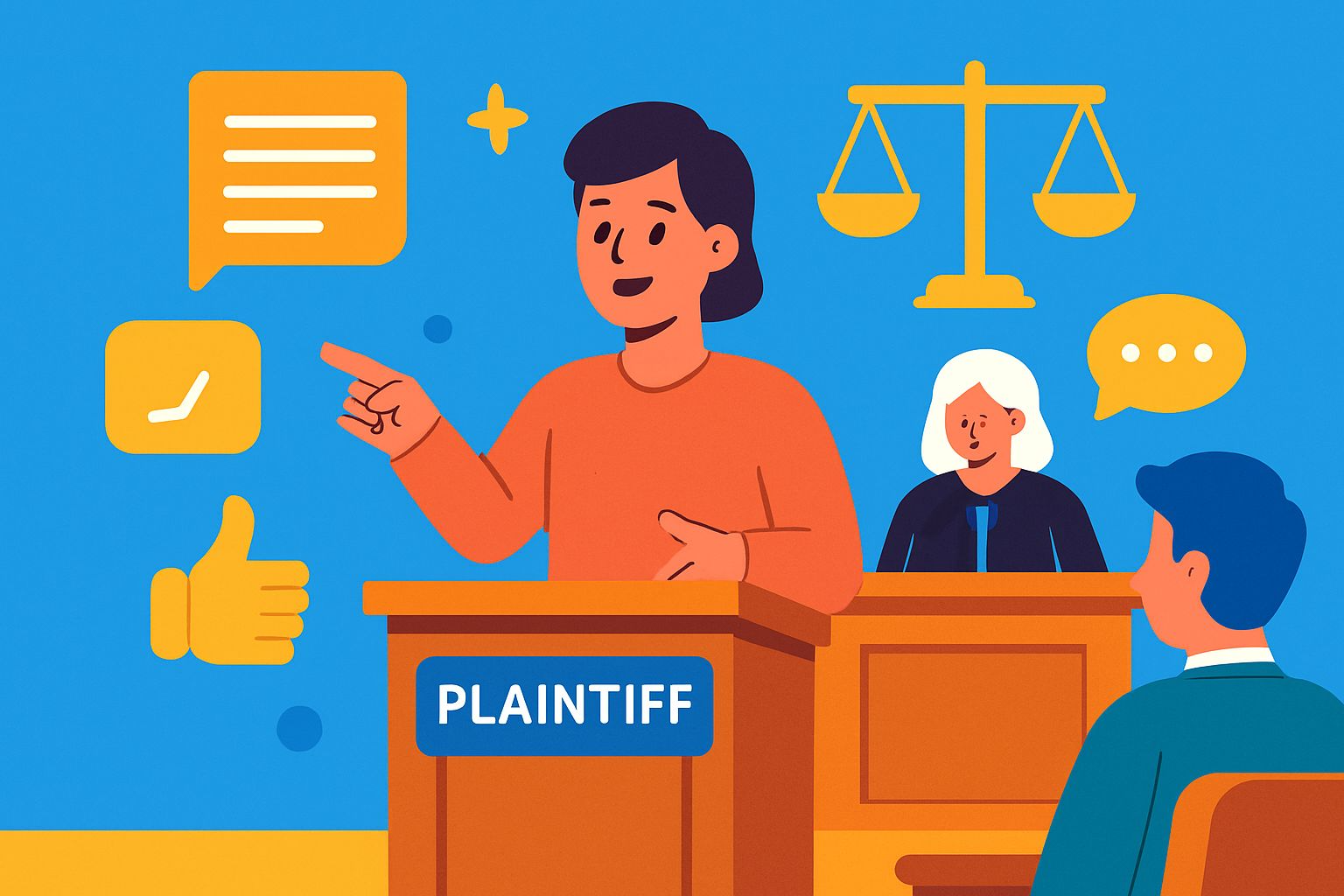
Have you ever come across the word “plaintiff” and paused, scratching your head, wondering if it was some fancy law term or a typo? Maybe you saw it in a text, a news article, or even online chats about court cases. It can feel a little intimidating at first — like someone dropped a legal bomb in casual conversation!
Quick Answer: Plaintiff means “the person who brings a case against someone in court.” It’s a formal/legal term, used in situations related to law, complaints, or disputes.
🧠 What Does Plaintiff Mean in Text?
In simple terms, a plaintiff is the person who starts a lawsuit. Think of it as the person who says, “Hey, something went wrong, and I want the court to fix it.”
Example Sentence:
“The plaintiff is suing the company for not paying overtime wages.”
In short:
Plaintiff = person filing a lawsuit = someone asking the court for justice.
📱 Where Is Plaintiff Commonly Used?
You’ll mainly encounter plaintiff in:
📄 Legal documents (lawsuits, court filings)
📰 News articles about trials or disputes
⚖️ Courtroom discussions or legal blogs
Tone: Formal, serious, and professional — not casual or social-media–friendly.
Unlike slang, you won’t usually see “plaintiff” in texting or casual chats unless someone is joking about a legal situation.
💬 Examples of Plaintiff in Conversation
Even though it’s a formal word, here’s how it might appear in casual discussions or explanations:
A: “Did you hear about the court case?”
B: “Yeah, the plaintiff is asking for compensation 😬”
A: “Who started the lawsuit?”
B: “The plaintiff. They claim the landlord broke the contract.”
A: “Why’s the company in trouble?”
B: “The plaintiff said they didn’t get paid properly.”
A: “This is so confusing 🤯”
B: “Just think: plaintiff = the one suing someone.”
A: “Is the plaintiff winning?”
B: “Not yet, the trial’s still ongoing.”
🕓 When to Use and When Not to Use Plaintiff
✅ When to Use:
Talking about lawsuits or legal disputes
Reading or writing news articles about court cases
Explaining legal situations to friends or colleagues
❌ When Not to Use:
- Casual texting unrelated to law
- Flirty, friendly, or playful conversations
- Informal social media posts unless making a legal joke
Comparison Table:
| Context | Example Phrase | Why It Works |
|---|---|---|
| Friend Chat | “The plaintiff is suing the company 😬” | Casual explanation of legal stuff |
| Work Chat | “The plaintiff filed a complaint.” | Professional & clear |
| News Article | “The plaintiff in the case claims damages.” | Formal & precise |
🔄 Similar Legal Terms or Alternatives
| Term | Meaning | When to Use |
|---|---|---|
| Defendant | The person being sued | Legal contexts, formal |
| Complainant | Someone who makes a formal complaint | Legal or HR settings |
| Litigant | A person involved in a lawsuit | Courts, law discussions |
| Claimant | A person making a claim | Insurance, legal, formal documents |
❓ FAQs About Plaintiff
Q1: Is plaintiff a slang word?
No, it’s a formal legal term used in law and official documents.
Q2: Can I use plaintiff in a text?
Only if you’re talking about legal matters — otherwise, it might sound too formal.
Q3: What’s the difference between plaintiff and defendant?
The plaintiff files the lawsuit; the defendant is the person being sued.
Q4: Can I say “complainant” instead of plaintiff?
Yes, but “complainant” is more common in administrative or non-court situations.
Q5: Is plaintiff used internationally?
Yes, but mostly in English-speaking legal systems like the US, UK, Canada, and Australia.

Marconi is the creative mind behind Rizz Line Club, your go-to hub for the smoothest rizz lines, clever captions, and charming one-liners. With a passion for wordplay and viral trends, Marconi brings fresh, witty, and relatable content that keeps your socials lit and your DMs winning. When he's not crafting the perfect rizz, he's probably decoding pop culture or vibing with meme-worthy humor.
- Marconihttps://rizzlineclub.com/author/info-irtazagmail-com/

- Marconihttps://rizzlineclub.com/author/info-irtazagmail-com/

- Marconihttps://rizzlineclub.com/author/info-irtazagmail-com/

- Marconihttps://rizzlineclub.com/author/info-irtazagmail-com/