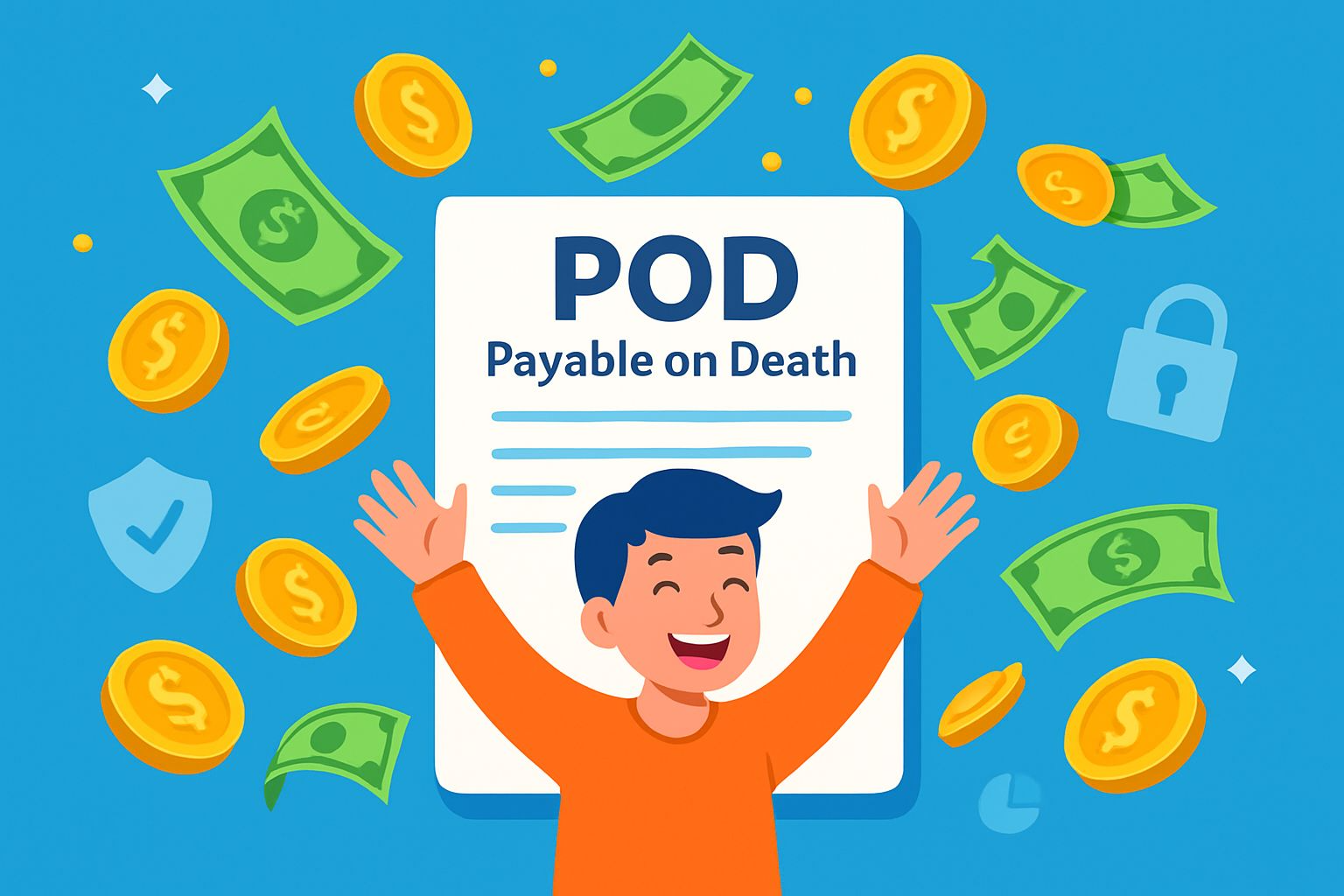
Scrolling through your bank statements or reading about account management, you might have seen the abbreviation POD and wondered, “What does this mean?” At first glance, it seems cryptic — almost like a secret banking code. But don’t worry, it’s actually pretty simple once you know the context. Understanding POD can help you better manage your accounts and know what happens to your money if something unexpected occurs.
Quick Answer: POD means “Payable on Death.” It’s a formal banking term used to specify that the money in an account goes directly to a named beneficiary when the account holder passes away.
🧠 What Does POD Mean in Text?
In banking, a POD account allows the account owner to name a beneficiary who will automatically receive the funds upon the owner’s death. This avoids probate and makes transferring money simpler.
Example Sentence:
“I set up my savings account as POD for my daughter, so she’ll get it immediately if anything happens to me.”
In short:
POD = Payable on Death = Funds go directly to a named beneficiary after death.
📱 Where Is POD Commonly Used?
🏦 Banks and credit unions
📄 Account opening forms
🏠 Estate planning and financial advice
💻 Online banking platforms
Tone: Formal and professional — not casual or social-media–friendly.
While it’s rarely used in texting slang, some financial discussions online or in forums may mention POD accounts.
💬 Examples of POD in Conversation
Here are some realistic examples of how POD might appear in discussions:
A: “Did you set up a beneficiary for your account?”
B: “Yes, it’s a POD, so my spouse will get it automatically.”
A: “I’m worried about probate delays.”
B: “Just make your checking account POD — it’s straightforward.”
A: “How does the inheritance process work?”
B: “If it’s POD, the money goes directly to the named person, no court needed.”
A: “Can I change the beneficiary later?”
B: “Yes, you can update POD details anytime with the bank.”
A: “Is it safe to use POD?”
B: “Absolutely, banks handle it securely and it’s legally binding.”
🕓 When to Use and When Not to Use POD
✅ When to Use:
Planning for inheritance
Protecting your loved ones financially
Avoiding probate
❌ When Not to Use:
- Short-term or casual accounts
- Shared accounts with no beneficiaries
- Situations needing complex estate planning
Comparison Table:
| Context | Example Phrase | Why It Works |
|---|---|---|
| Friend Chat | “I made my savings POD for my kids 😌” | Casual explanation of formal term |
| Work Chat | “Set up the account as POD for your spouse” | Professional & clear |
| “Please complete the POD beneficiary form” | Formal & legally precise |
🔄 Similar Banking Terms or Alternatives
| Term | Meaning | When to Use |
|---|---|---|
| TOD | Transfer on Death | Similar to POD for brokerage accounts |
| Beneficiary | Person designated to receive funds | Life insurance, retirement accounts |
| Trust | Legal arrangement for managing assets | Complex estate planning |
| Estate | Total assets and liabilities of a person | Probate or inheritance planning |
❓ FAQs About POD in Banking
Q1: Is POD the same as a beneficiary?
Yes, a POD account names a beneficiary, but it’s specific to bank accounts.
Q2: Can I have multiple POD beneficiaries?
Yes, most banks allow multiple beneficiaries and specify percentage allocations.
Q3: Does POD avoid taxes?
It may help avoid probate, but taxes depend on estate laws.
Q4: Can I change a POD beneficiary?
Yes, you can update it anytime by contacting your bank.
Q5: Is POD account safe?
Absolutely, POD accounts are secure and legally enforceable.

Marconi is the creative mind behind Rizz Line Club, your go-to hub for the smoothest rizz lines, clever captions, and charming one-liners. With a passion for wordplay and viral trends, Marconi brings fresh, witty, and relatable content that keeps your socials lit and your DMs winning. When he's not crafting the perfect rizz, he's probably decoding pop culture or vibing with meme-worthy humor.
- Marconihttps://rizzlineclub.com/author/info-irtazagmail-com/

- Marconihttps://rizzlineclub.com/author/info-irtazagmail-com/

- Marconihttps://rizzlineclub.com/author/info-irtazagmail-com/

- Marconihttps://rizzlineclub.com/author/info-irtazagmail-com/